

Easter reminds us that the worst mess in our lives can become our greatest message.
Disgraced Civil War general Lew Wallace turned a surprise encounter with the leading atheist of the 19th century into a best-selling novel and inspired the greatest Easter movie ever.

A decade had passed since the war, but the scars and memories were fresh.
On a train to attend a Yankee reunion of fellow veterans, Lew Wallace reflected on the horrors he encountered in many battles.
He failed to bring his troops to the front line at Shiloh.
Frustrated by a misunderstanding of verbal orders, Wallace, a natural warrior, arrived to the field on the wrong day. But the damage was done.
Lew Wallace was relieved of his command and remained on the sidelines for most of the remaining war.
The Shiloh failure haunted him for years.
“Shiloh and its slanders! Will the world ever acquit me of them? If I were guilty, I would not feel them as keenly.”
— Lew Wallace
Surprise encounter

Suddenly, a familiar voice in the next train car startles him, “Is that you, General Wallace? I want to talk.”
Robert Ingersoll, also a veteran of Shiloh, was traveling the countryside speaking and making a name for himself as “The Great Agnostic.”
Ingersoll was the leading atheist of the 19th century.
He was a lawyer, a political leader, and a gifted orator.
Wallace accepted Ingersoll’s invitation and went to his train car.
The discussion, no light subject, went all night.
“He went over the whole question of the Bible, of the immortality of the soul, of the divinity of God, and of heaven and hell. He vomited forth ideas and arguments like an intellectual volcano.”
— Lew Wallace
Ingersoll argued all night that Jesus as God was nonsense.
Jesus is . . .
- a great hero
- an ideal man
- a courageous person
- but not God
Ingersoll insisted that people should divest themselves of this erroneous thinking.
Lew Wallace was not religious either.
He states in his autobiography that he had no clear convictions about God or Christ and that he didn’t believe or disbelieve.
But he felt frustrated by his ignorance.
So, Lew resolved to research the whole issue and to resolve one way or the other who Jesus Christ really was.
From that research came something extraordinary.
Lew Wallace wrote Ben Hur: A Tale of the Christ, one of the greatest American novels ever written.

Instead of winning another soul to skepticism, Robert Ingersoll inspired a Biblical epic.
Quick facts about Lew Wallace and Ben-Hur

- Most of the manuscript was written under Wallace’s beech tree
- Published in 1880, four years after the train ride with Ingersoll
- Best-selling American novel of the 19th century
- The four-year project inspired Wallace and led to his faith in Christ
- The 1959 MGM film won 11 Academy Awards in 1960
- The book’s sales surpassed Gone With The Wind
“With this beautiful and reverent book, you have lightened the burden of my daily life.”
— Letter to Lew Wallace from President James A. Garfield
What Easter Teaches About Turning Failure Into Purpose
Easter is a reminder that our failures are not the end of the story.
Lew Wallace carried the weight of Shiloh for years.
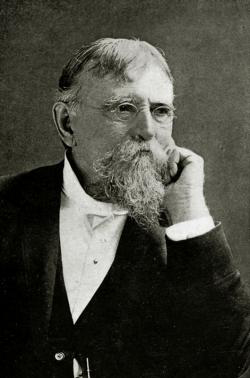
Yet the very questions that troubled him led him to write Ben-Hur, a story that has inspired millions.
The same pattern still unfolds today. The mess we wish had never happened can become the message we are meant to share.
Easter says redemption is real.
So wherever you find yourself this season, do not waste your mess.
Let God turn it into your message.
Stories like this are part of the reflections I write about life, resilience, and human turning points explored on my About Stephen Blaising page.