After 44 years of living through stock market volatility, I know why the smartest investors never panic.
They see chaos as a chance to make their future brighter. They cheat financial market chaos.
Rather than allowing a moment’s fear to dictate direction, they stick to a well-thought-out plan to move up the path to success.
Panic is not a plan.
Patience is.
I have owned stocks and lived through ten of the worst one-day stock market declines from 1981 to 2025.
I was there then and am here now, still owning stocks and not panicking or selling.
Stock market panic is not a plan
In fact, from 2000 to 2002, I lectured about wise investing at meetings around the country as the NASDAQ was on its way to losing 80% of its value from the March 2000 top to the October 2002 low. The Dow lost 50% of its value during the same time.
Indeed, since 1980, the S&P 500 has had an average intra-year drop of 14%. This includes all years, whether they end positively or negatively. I started my financial services business in 1981 and have witnessed this phenomenon for 44 years.
We don’t know where, when, or how these phenomena will occur. We have no control over uncertainty, but we can have perfect control over how we respond.
The last thing in the world that long-term, goal-focused savers and builders of wealth do when the whole world is selling is – you know – sell.
A diversified stock portfolio is a plan
Don’t confuse headline risk with portfolio risk.
Remember that your stock portfolio is not an index that goes up or down daily. It is a portfolio of actual companies with real earnings.
So, coach, what if it declines tomorrow? It doesn’t matter what markets do tomorrow; what matters is what they ultimately do. What matters is that you own a highly diversified portfolio of well-managed companies that make and sell products that the world needs, demands, and pays for.
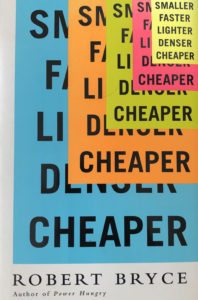
If you doubt this, read Robert Bryce’s book Smaller, Faster, Lighter, Denser, Cheaper.
The best investment advice you can ever follow has three qualities.
Don’t laugh at the possibility of a global financial collapse.
It almost happened ten years ago and I still can’t believe it.
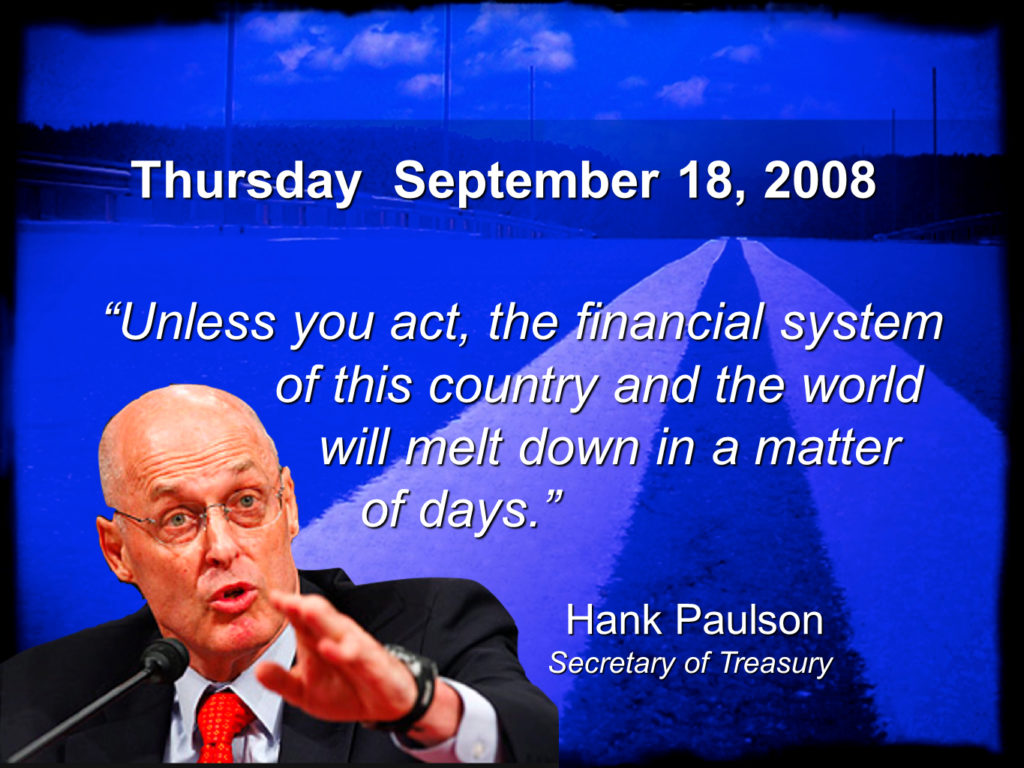
On Sunday September 14, 2008, the Treasury Secretary of the United States was on his cell phone down the hall from his office so no one could hear him.
Hank Paulson was panic stricken and he wanted to talk to his wife Wendy.
“What if the system collapses? Everybody is looking to me, and I don’t have the answer. I am really scared.” Henry M. Paulson Jr., On the Brink: Inside the Race to Stop the Collapse of the Global Financial System
Let that sink in for a minute.
Could you ever imagine the Treasury Secretary of the United States scared?
Days later he pleas with every leader of our government for quick action.
The brink of financial collapse 2008/Steve Blaising/The Doctrine of the Future and the Marketplace
Fan the same three sparks wealthy people use creatively which often leads to fortune.
Steve Jobs, Tom Douglas, and Mark Twain did.
You can, too.
Steve Jobs fanning the sparks to great wealth/Baker Jarvis/Shutterstock
Wealthy spark #1: Be foolish
Be foolish.
Not stupid foolish. Creatively foolish.
When Steve Jobs formally dropped out of Reed College, he informally dropped in on certain courses.
One of his favorites was calligraphy.
That’s why the fonts on a Mac are visually striking.
Steve Jobs saw the craving for beauty before he saw programming.
“We designed the (calligraphy) into the Mac. It was the first computer with beautiful typography. If I had never dropped in on that single course in college, the Mac would have never had multiple typefaces. And since Windows just copied the Mac, it’s likely that no personal computer would have them.” — Steve Jobs, 2005 Stanford Speech
Great wealth is highly sensitive to the actions we take.
Wealth breathes inside of us.
But it’s manifest through persistent acts of creation.
Wealthy spark #2: Fan creativity
Stay glued to creativity.
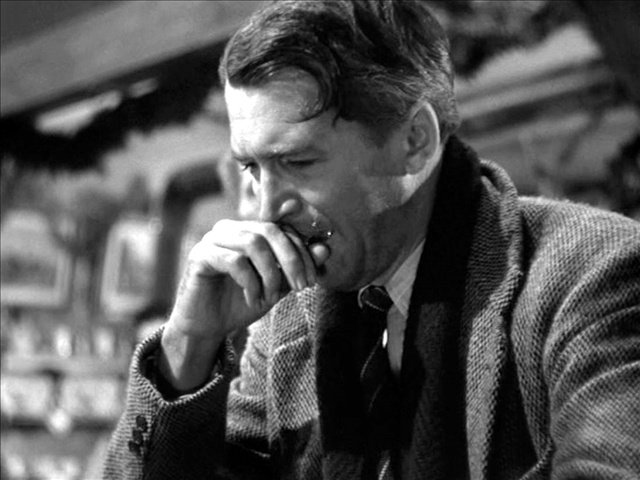
That’s not what George Bailey did in the movie It’s A Wonderful Life.
James Stewart as George Bailey/American Film Institute
He didn’t have a wonderful life, just like so many in the workforce today, because he limited his work philosophy to hard-core grinding.
That was it. Find a job that makes “cents” and stick to it even if it doesn’t match your soul and spirit.
That’s what Tom Douglas did in the eighties in Dallas, trying to lease buildings as a commercial real estate agent.
I ran into Tom at church one day and asked him about business.
He gave me that deadpan look and said it was so bad that it…
“Makes you wanna smoke cigarettes and drink hard liquor.” — Tom Douglas
Like George Bailey, Tom was depressed in a highly commendable career.
He knew his work wasn’t glued to his soul.
So I asked him on another day at church, “Tom, what do you wanna really do?”
“Write country music.”
Right, Tom. Just like everybody else.
Except Tom was rewarded when he did just that.
Move to Nashville and write country music.
“When I finally came to terms with the fact that creativity was a God given gift…and a gift I should treasure and enjoy…..things started to fall into place….one gleaming Saturday morning at age 39, I sat down at an out of tune piano and opened up my black and white composition book and told the truth…I opened up a vein and bled on the page…..
I wrote a song about a guy starting over..I wrote my story..it is a metaphor…..staring down his demons….asking for forgiveness….broken….needing and finding redemption….’I think I’m on a roll here in Little Rock…solid as a stone baby wait and see..got one small problem here in Little Rock….without you baby I’m not me’… Went to an NSAI songwriting seminar in Austin Tx ….re-connected with Paul Worley …a friend whom I had known when I lived in Nashville ten years earlier…there is a plan after ALL! He signed me to Sony Publishing…Collin Raye recorded Little Rock…it went to #1…the Red Sea parted and I walked to the Promise Land.” — Tom Douglas, Songwriters Bleed Ink
Tom Douglas 1994/Jodi Richfield
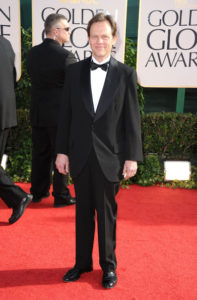
Tom Douglas 2011 Golden Globes/Frazier Harrison/Getty Images
Tom Douglas wrote top ten hits for Miranda Lambert, Lady Antebellum, Tim McGraw, Martina McBride, and John Michael Montgomery.
In 2010, he was nominated for an Oscar and a Golden Globe for the song “Coming Home.” In 2014, he was inducted into the Nashville Songwriters Hall of Fame.
Wealthy folks stay glued to creativity even when the present circumstances defy faith.
Wealthy spark #3: Be an amateur
Be a silly amateur.
In his book ShowYourWork, Austin Kleon says that a pro is just an amateur “who gets obsessed by something and spends a ton of time thinking out loud about it.” In effect, a pro is an amateur willing to be a fool in love with an idea repeatedly.
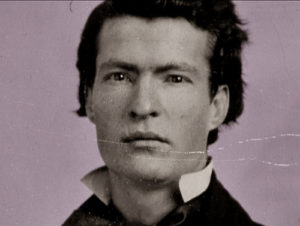
Mark Twain sparked a wealth of ideas with voracious reading
What does this have to do with being wealthy? Two things.
“On the table by him, and on his bed, and on the billiard-room shelves, he kept the books he read most. All or nearly all, had annotations—spontaneously uttered marginal notes, title prefatories, or concluding comments. They were the books he had read again and again, and it was seldom that he had not had something to say with each fresh reading.” — Albert Bigelow, Mark Twain: A Biography
Be foolish. Be creative. Be a silly amateur.
What fires your creativity?
Stories like this are part of the reflections I write about life, resilience, and human turning points explored on my About Stephen Blaisingpage.