

The Alamo survivors often overlooked with the most powerful lessons for encouragement are women.
Much is made of the legendary defenders — William Barrett Travis, James Bowie, and Davy Crockett.
But, how about the women?
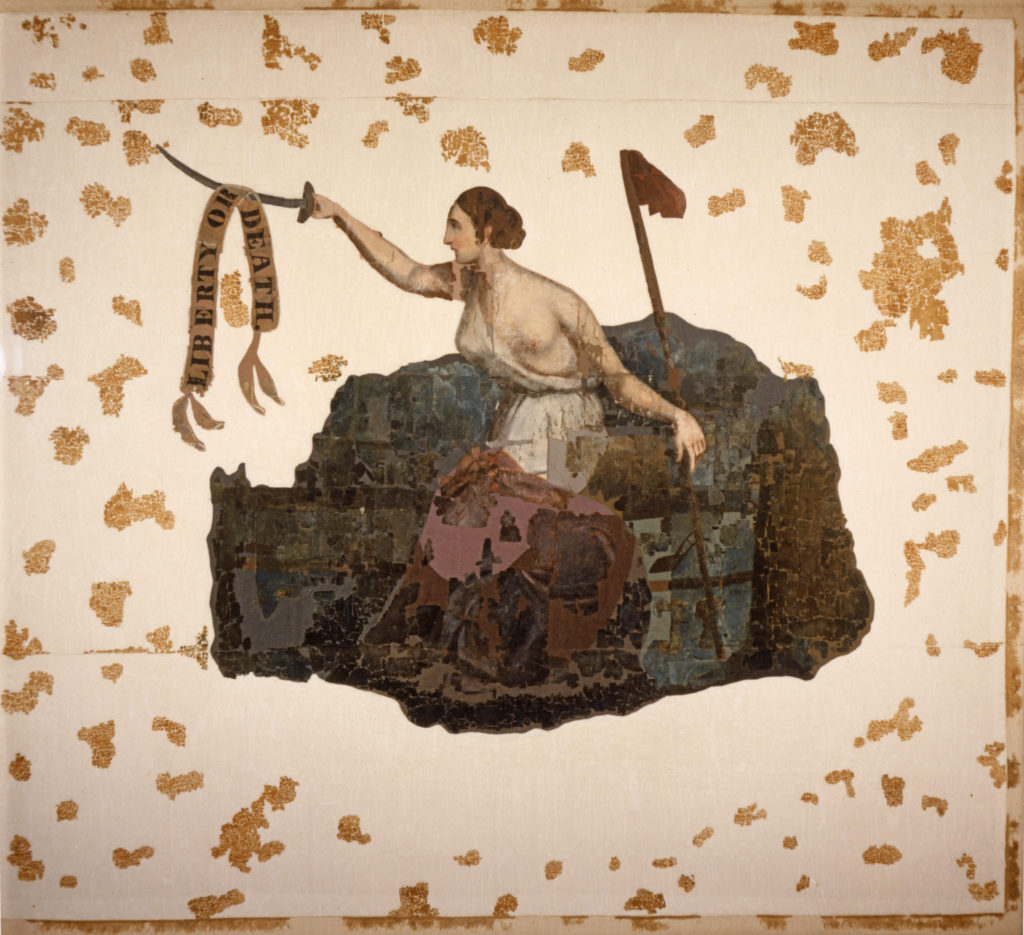
Three women who survived the Alamo show us how to face disaster with courage and resilience.
The Forgotten Courage of the Alamo Survivors
Cold days and nights are distinctive in Texas.
Nothing to block the wind, which is what the Alamo volunteers suffered the night of March 5, 1836, when Davy Crockett serenaded raw nerves with his violin right before Mexican troops stormed the walls.
Right after the siege, the survivors, all women and some children, asked to search for the bodies of their loved ones.
Santa Anna denied that request, and they were marched through a sea of blood to the home of Don Ramon Musquiz, an official who owned a boarding house on the main plaza of San Antonio.

How did they overcome?
Susanna Dickinson: Courage After Catastrophe
Susanna Dickinson knew that adaptability was critical for her survival.
After the massacre,
- She journeys on horseback with her daughter and two slaves to give Sam Houston the tragic news and Santa Anna’s threat.
- She flees to East Texas in the “Runaway Scrape.”
- She moves to Houston and works in boarding houses.
- She ultimately moves to Austin and marries a German businessman.
The best survivors let go of the way things used to be and adapt.
Susanna finished her life in a mansion on a farm at today’s 32nd and Duval Street in Austin.
“She took life as it came, lived it on the best terms she could get, and achieved a measure of contentment.”
— James L Haley, Guest Curator, Dickinson Museum
Many folks refuse to recognize circumstances they can’t control.
But not Susanna Dickinson. She recognized that life has its ups and downs and adjusted.
Ana Salazar Castro Esparza: Survival in the Chaos
Ana Salazar Castro Esparza emerged from the slaughter with determination.
She was willing to die in the battle and expected this fate.
Her son, Enrique Esparza, told San Antonio journalists in a series of interviews from 1901-1911 that his mother survived the 13-day siege but became sick with pneumonia shortly after. And then she worked through hard financial times.
“After the president (Santa Anna) had given my mother her two dollars and a blanket, he told her she was free to go where she liked. We gathered what belongings we could together and went to our cousin’s place on North Flores Street.”
— Enrique Esparza
After Ana died in 1849, the Esparza brothers became successful farmers and developed a lucrative freighting business.
An African proverb describes women like Ana Esparza.
“The wind does not break a tree that bends.”
She picked herself up and passed a legacy of resilience to her sons.
Andrea Castañón de Villanueva: The Nurse of the Alamo
On April 13, 1891, the Texas legislature awarded Andrea Castañón de Villanueva a government pension of $120 a year for her nursing services to the sick and wounded during the siege.
She confirmed her nursing role in many interviews, including care for Jim Bowie.
Andrea navigated the split allegiance of her family because her father was loyal to Mexico and General Santa Anna, while her uncles sided with the Texas patriots.
The word “tenacity” comes from the Latin “tenacitas,” the act of holding fast.
Tenacity was Andrea’s superglue in tough times.
She persisted when others let go.
Yes, life hurts everyone, but tenacity absorbs pain and suffering.
Andrea had an indomitable spirit. In her life after the Alamo, she . . .
- nursed the sick during smallpox epidemics
- raised 22 orphan children
- gave money to stranded travelers
Yes, life hurts everyone, but tenacity absorbs pain and suffering.
In the spring of 1901, President William McKinley visited San Antonio by train, where he was presented with a fresh painting by famed artist Vernor Moore White.
It was the Alamo with the image of Andrea Castañeda de Villanueva.
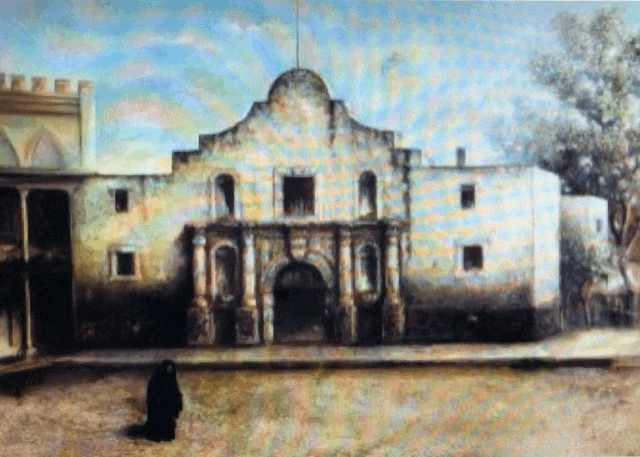
How fitting that a painting with a brave Hispanic nurse hung in McKinley’s White House.
Stories like these remind us that resilience often appears when everything seems lost. We see it in history, in sports, and even in moments like Ilia Malinin’s Olympic comeback, where courage means risking failure instead of playing it safe.
And sometimes the strength to keep moving forward simply begins with enthusiasm for the next step.
What the Alamo Survivors Teach Us About Disaster
The Alamo survivors remind us that disaster does not get the final word.
First, courage often appears in ordinary people. The women who survived the Alamo were not soldiers or famous leaders, yet their strength amid chaos carried the story forward.
Second, survival requires resilience. These women endured the siege, the terrifying final assault, and the uncertainty that followed.
Finally, the Alamo survivors remind us that even in defeat, purpose remains. Their survival preserved the story that inspired the rallying cry “Remember the Alamo,” leading to victory at San Jacinto only weeks later.
Nearly two centuries later, their courage still speaks to anyone facing hardship.
Which of these survivors inspires you?
Stories like this are part of the reflections I write about life, resilience, and human turning points explored on my About Stephen Blaising page.